

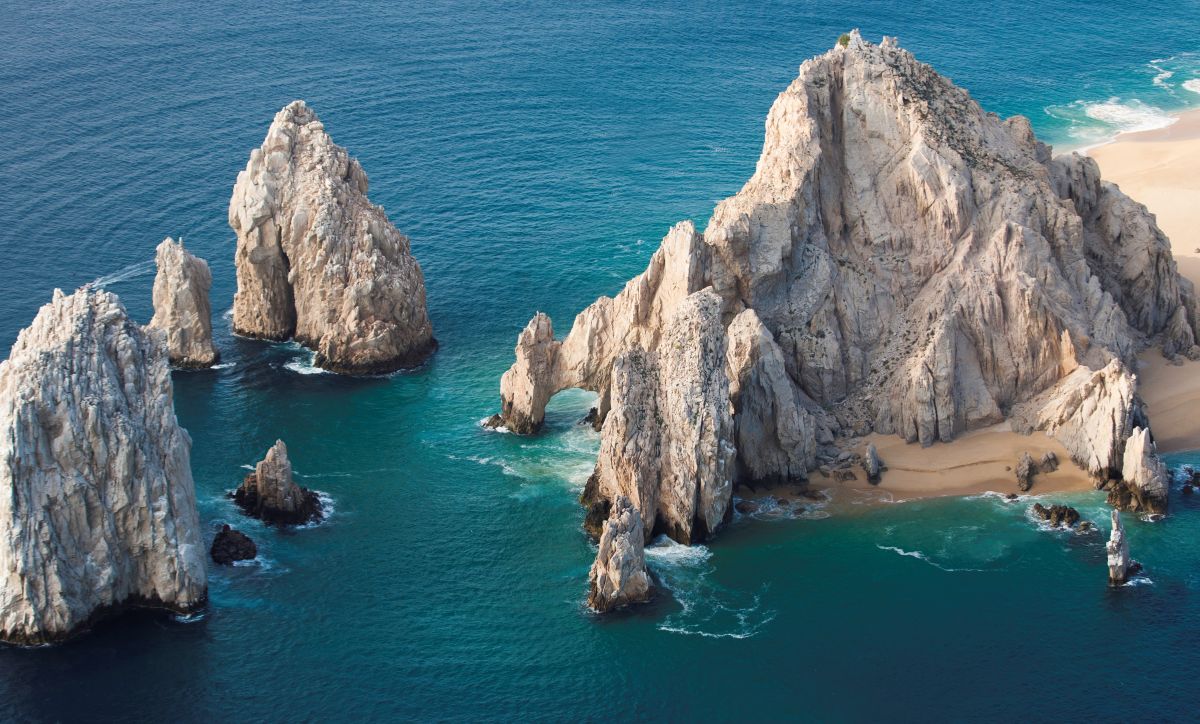
Most guests searching for the best time to visit Cabo are asking the wrong question. Not because timing doesn't matter. It matters enormously. But the real question is what kind of experience you're actually choosing when you pick a window in the calendar.
Los Cabos doesn't have a bad season. It has different ones. Learning to read the difference is how you end up with a trip that feels right rather than one that just happened to work out.
What Actually Changes With the Calendar
The coastline stays the same. The desert meeting the Sea of Cortez, the light in the late afternoon, the particular quiet of a good villa in the morning — that's not seasonal. What changes is everything around it.
Our team has been watching these patterns for years. Spring break brings a specific energy to Cabo San Lucas. The marina fills up, beach clubs run at capacity, and restaurants that were easy to get into in February require a week's notice. That energy is real, and some guests love it. Others didn't realize they were booking into the middle of it until they arrived.
December through early January is the other peak. Families, multi-generational groups, corporate retreats that locked their dates six months out. The destination is at its most social and most coordinated. There is nowhere in Los Cabos that feels quiet during Christmas week, and anyone who tells you otherwise hasn't been here for it.
The shoulder periods — late April into May, and again in October — are when the destination exhales. Not empty. Still fully operational, still warm, still Cabo. But the roads move differently. A last-minute dinner reservation becomes possible again. The villa team has more room to breathe, and that shows up in the quality of your stay in ways that are hard to quantify but immediately noticeable.
What Calm Actually Feels Like Here
During the quieter stretches, Los Cabos becomes more fluid.
You wake up without the day already pulling at you. A late breakfast doesn't compress everything that comes after. If the group decides mid-morning to head to Chileno Bay instead of whatever was loosely planned, that adjustment costs nothing. No scramble, no calls to move anything around.
Inside the villa, the rhythm is unhurried by default. Service happens at your pace rather than around a schedule the destination is also running. Guests who have been to Cabo during peak season and return during a quieter period consistently say the same thing: it feels like a different place. It isn't. It's the same place with more room in it.
What Busy Periods Are Actually Like
Busier doesn't mean worse. It means structured.
You start thinking about dinner earlier in the day. Not as a burden, but as a reality. The reservation that seemed optional on Tuesday becomes essential by Saturday. Transportation timing matters more. Leaving the villa for any reason requires a bit more intention.
For some guests, that structure adds energy. The destination feels alive in a way that matches exactly what they came for. For others, especially families with young children or groups who came specifically to decompress, the coordination load is higher than expected.
Neither response is wrong. They're just different trips.
How This Shows Up Inside the Villa
The villa is where timing becomes most personal.
During quieter periods, the home holds everything. Lunch drifts into the afternoon. Dinner happens when the group feels ready. The concierge can shift the day without a cascade of calls to vendors already committed elsewhere. The whole stay has a looseness that feels less like a schedule and more like actual rest.
During peak periods, the villa is still your anchor, but the day has more structure around it. Experiences need to be confirmed earlier, transportation coordinated with more precision, and the concierge is managing a more complex set of moving parts on your behalf. That work still gets done. It just takes more of it.
One Window Worth Understanding
Late summer into early fall — roughly July through October — is when Los Cabos enters its rainy season. Most days are still fine. Cabo is desert by nature and sees far less rain than most tropical destinations, which surprises guests who assumed otherwise.
That said, this is also when the region can experience tropical weather systems, and while significant hurricanes have been rare in recent years, they're not impossible. Our team monitors conditions closely during this period and will always give guests an honest read on what's happening. The more important thing to know is that traveling during these months means building some flexibility into your plans, and making sure your travel insurance reflects that. We raise this not to discourage the dates but because guests who understand it arrive more prepared, and prepared guests have better trips.
The Conversation That Actually Helps
The question our team asks guests isn't when you want to come. It's how you want your days to feel.
Some people hear that and say immediately: I want flexibility. I want to wake up and not know exactly what's happening. Others say: I want things confirmed. I want the reservation there, the car arranged, the pieces already in place.
Both are completely valid. One of them suits specific windows in the calendar better than others, and that's where the conversation gets useful.
The best time to visit Cabo is the one that matches how your group actually travels. Not the one that ranks highest on a chart.
Thinking through timing for your stay? Our concierge team can walk you through what different windows actually look and feel like before you commit to dates.